Arquia 2020 Project
RE_HIVE
Project RE_HIVE seeks to offer a solution to collective housing models that have become obsolete in the social, economic and sustainable rhythms of today's cities. It takes as an example the housing colonies of the Barrio de la Concepción in Madrid.
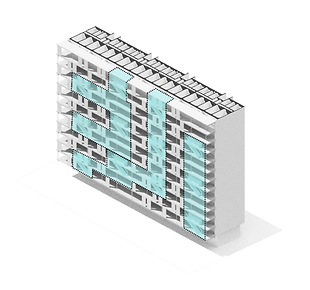
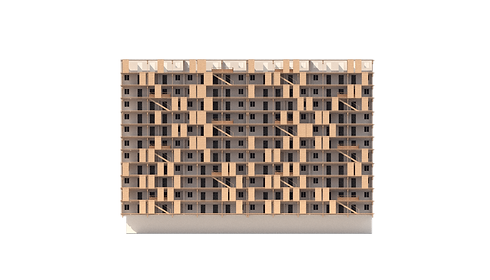
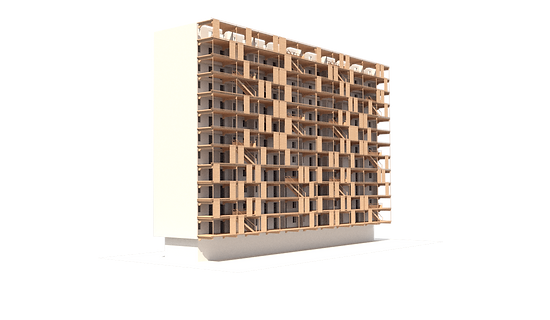
A neighbourhood conceived as a small city where more than 25,000 people live together at a short distance from the centre of Madrid and which was once the most densely populated area in Europe. A system modulated according to the building's own existing facade is proposed to expand the facade space by 3 metres and to conceive it as the link first between the neighbours and then as a connection of the building to the outside.
In this way, not only horizontal connections on the same floor are promoted, but also vertical ones, by this system of "elevated streets". This new skin also adapts itself in a sustainable way, providing both protection from the sun directly and integrated systems for the generation of renewable energy, improving the energy efficiency of the building's envelope.

The Barrio de la Concepcion area was constructed in Madrid in the early 60s, and was planned with a poor acess to the center of the city. It housing system was based in 50 to 70 sqm houses with two or three bedrooms, kitchen, bahtrom, lving room and a small terrace of no more than 1 meter. That isolated situation encouraged the conections and relations beetween neighbours.


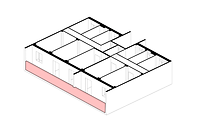
1_Demolition of the current living building terraces.


2_Placement of the pre-stressed concrete supports for the structure every 2,7m in the facade
3_Placement of the floor modules made of forged metal sheet every 2,7 m, suported in the prefabricated beams.

4_The modules containing stairs are previously planned when the structure is mounted.

5_The aluminium anchoring system of the facade elements is attached to the prefabricated structure.

6_Placement of the mobile elements of solar protection and photovoltaic energy colectors